


Shoe Rack Ideas for the Hallway: Space Saving and Modern Solutions
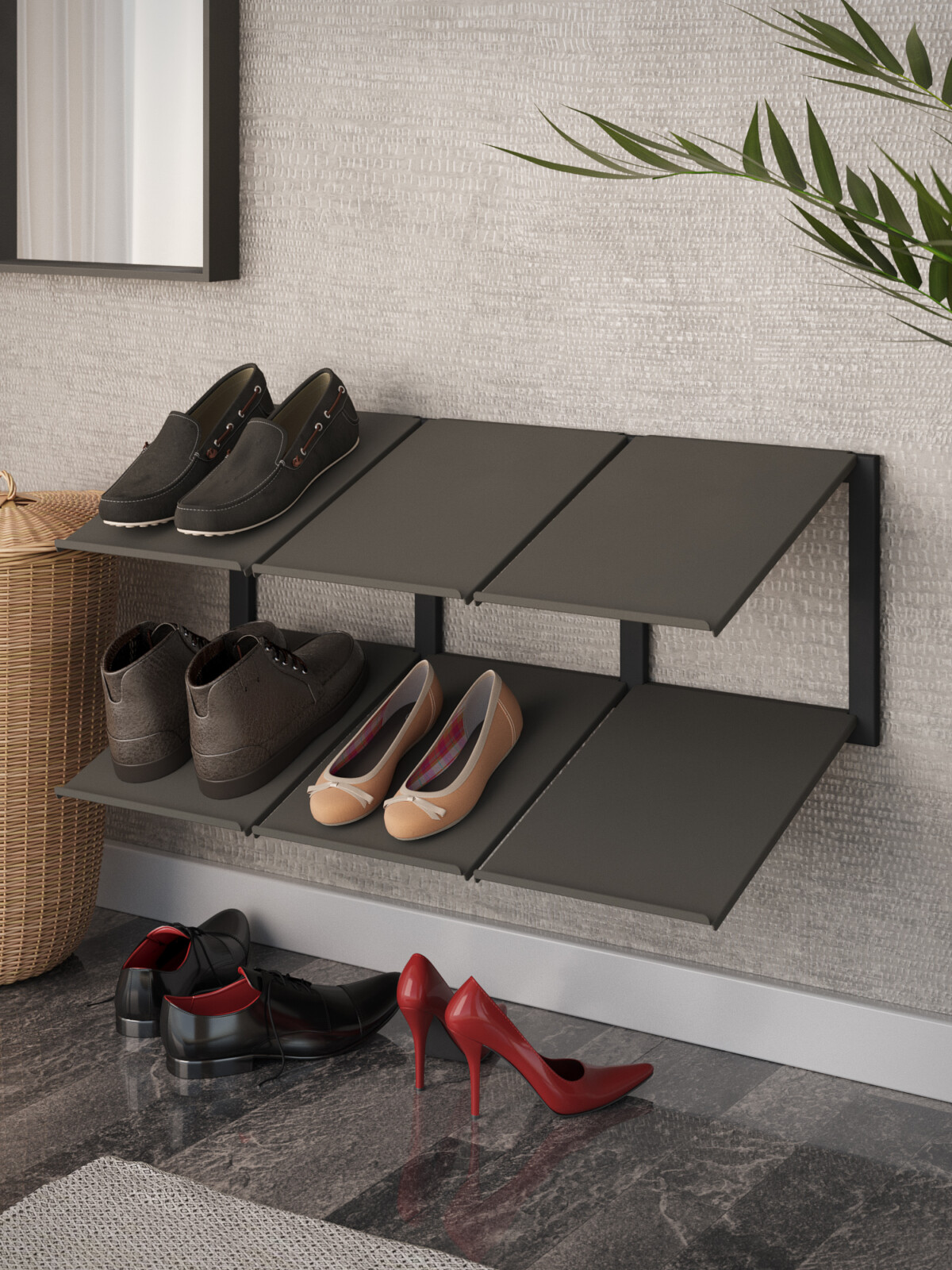
Shoes are often one of the main sources of clutter in a hallway. They are used every day, constantly moved around and rarely put away immediately.
That is exactly why a shoe rack becomes one of the most important furniture pieces in the entryway. It has a direct influence on whether the hallway feels structured and calm or visually chaotic.
A well-designed shoe rack does more than solve a practical problem. It shapes how the space functions, how movement flows through the room and how organized everyday life feels.
Why a good shoe rack matters in the hallway
The hallway is more than just a transition space. It is the area where every movement through the home begins and ends, which means it strongly affects how organized and balanced the entire home feels.
When shoes do not have a defined place, visual clutter builds up quickly. Even carefully designed interiors lose their impact once the floor starts to feel unstructured or overcrowded.
A well-chosen shoe rack helps create:
- better organization in the entryway
- smoother movement throughout the space
- a calmer and more structured atmosphere
- less visual clutter on the floor
In many hallways, the shoe rack becomes one of the first elements that introduces visible structure into the space.
Space saving shoe rack ideas for small hallways
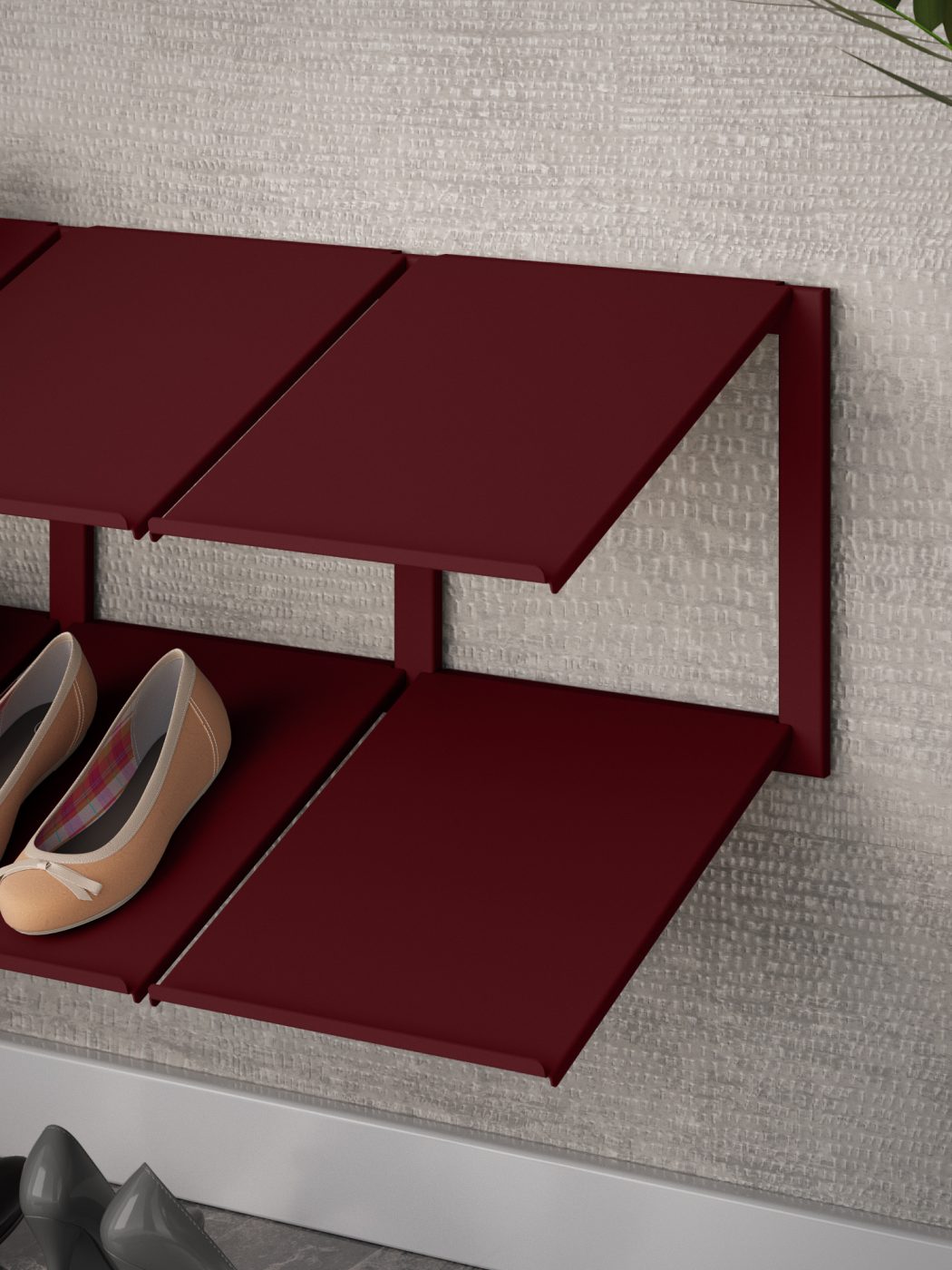
In small or narrow hallways, every centimeter matters. The goal is not to add more furniture, but to choose solutions that support movement while still providing enough storage.
Slim shoe racks work especially well because they preserve circulation space and prevent the hallway from feeling blocked. Wall-mounted designs create an even lighter effect by keeping the floor visually open.
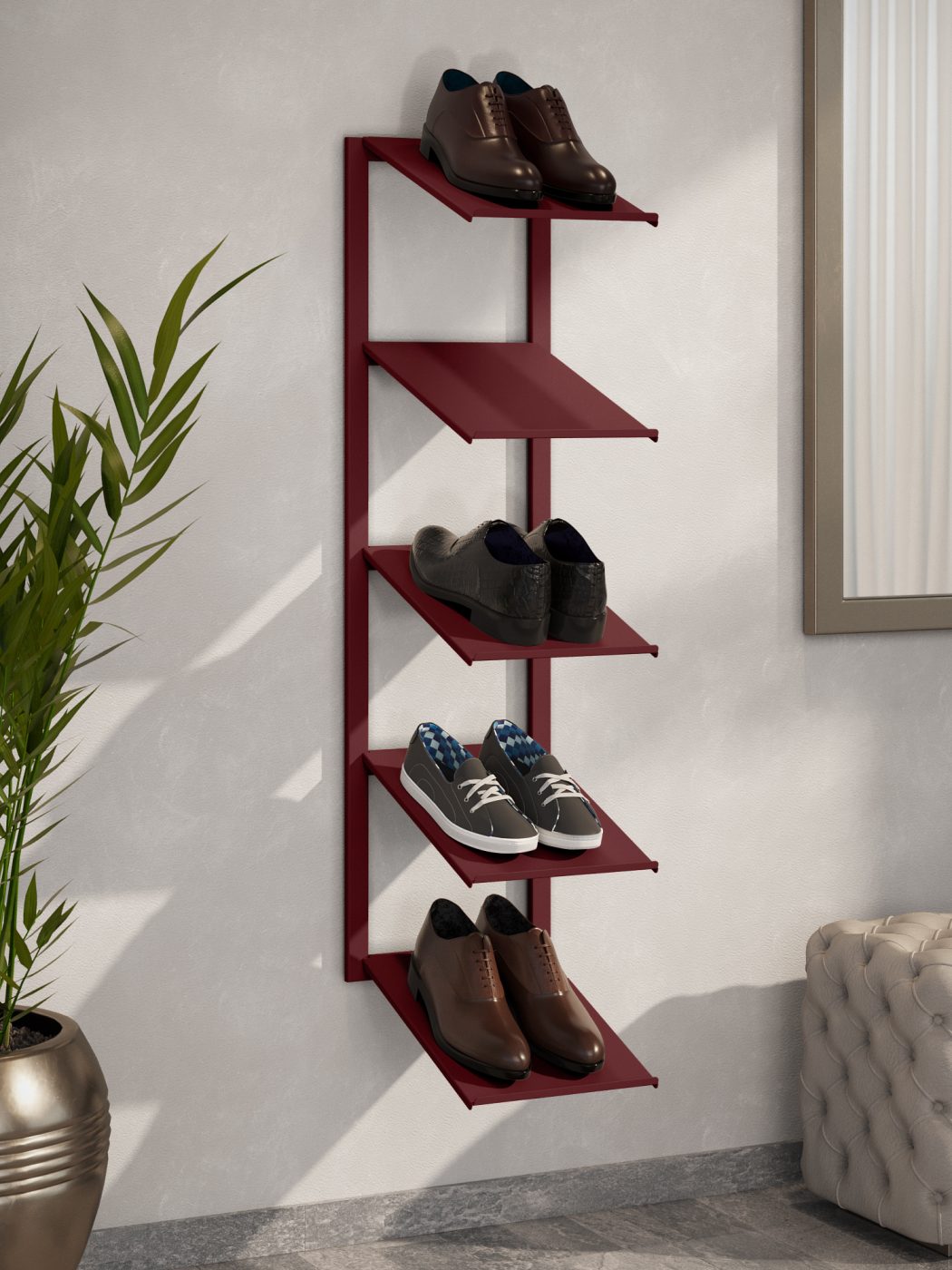
Vertical storage solutions are also highly effective. By using the height of the room, they allow more shoes to be stored without overcrowding the available floor space.
A space saving shoe rack works best when it adapts naturally to the room instead of forcing the room to adapt around it.
Explore our modular hallway shelving system
Discover our metal shoe rack for small spaces
Modern shoe racks for the hallway
A modern shoe rack is no longer just a practical storage piece. It becomes part of the overall spatial composition of the hallway.
Clean lines, reduced forms and carefully selected materials allow the furniture to integrate naturally into the space instead of demanding attention. Modern shoe racks create order while maintaining a calm and visually balanced atmosphere.
Metal shoe racks are especially effective in contemporary interiors. Their precise lines and open structure create a lighter architectural appearance without sacrificing durability.
When combined with wood, the result becomes even more balanced. Metal introduces structure and clarity, while wood adds warmth and softness. This combination works particularly well in modern and minimalist interiors because it feels refined without appearing cold.
A modern shoe rack rarely stands out because of dramatic design. Its quality is reflected in how naturally it becomes part of everyday life.
Open or closed shoe rack
The choice between an open or closed shoe rack depends largely on how the hallway is used and what kind of atmosphere the space should create.
Open shoe racks feel lighter, more accessible and often more modern. They allow quick access to frequently used shoes and support a smoother daily routine. When materials and proportions are chosen carefully, open solutions can still maintain a calm and organized appearance.
Closed shoe cabinets create a more visually reduced environment because shoes remain hidden from view. This often results in a cleaner overall impression, although it may reduce accessibility and flexibility slightly.
In many cases, a combination of both approaches works best. Frequently used shoes remain easily accessible, while less frequently worn pairs can stay hidden and organized.
Combining shoe racks with hallway storage
A shoe rack can serve a much larger role than simply storing shoes. In modern hallways, it often becomes part of a broader storage system.
Integrated solutions make it easier to organize bags, accessories and everyday essentials alongside footwear. This creates a more structured and balanced entryway overall.
Modular systems are especially useful because they can adapt over time and grow together with the changing needs of the space.
Common mistakes with hallway shoe racks
Many hallway problems are not caused by the wrong furniture itself, but by poor decisions during the selection process.
Shoe racks that are too deep interrupt movement and make the hallway feel narrower than necessary. Smaller units may fail to provide enough storage, quickly leading back to clutter.
Placement also matters. A poorly positioned shoe rack can disrupt circulation and create visual imbalance within the room.
A good shoe rack should never function as an isolated object. It needs to work together with the overall structure of the hallway.
How to choose the right shoe rack
Choosing the right shoe rack should be based on everyday use rather than trends alone.
Important questions include:
- How many shoes need to be stored regularly
- How often are they used
- How much space is realistically available
- Should the storage remain open, closed or combined
- What overall atmosphere should the hallway create
A good shoe rack should integrate naturally into the room while remaining practical and visually balanced.
Important characteristics include:
- space saving proportions
- sufficient storage capacity
- clear structure and organization
- durable materials
- a design that does not visually overwhelm the space
The best decisions are often the least noticeable, yet they shape how calm, functional and organized the hallway feels every single day.
Frequently Asked Questions About Shoe Racks and Hallway Shoe Storage
What type of shoe rack works best in a small hallway?
In small hallways, the most important factors are depth, proportion and functionality. Slim shoe racks or wall mounted solutions are usually the most effective because they preserve movement and keep the floor visually open. Furniture with a reduced depth feels lighter and prevents the hallway from becoming overcrowded.
Vertical storage can also be very useful in smaller spaces. By using the height of the room more efficiently, it becomes possible to increase storage capacity without sacrificing valuable floor space. The best shoe rack is always the one that adapts naturally to the room instead of dominating it.
Is an open or closed shoe rack better?
The answer depends on how the hallway is used and what kind of atmosphere you want to create. Open shoe racks provide faster access and are ideal for frequently worn shoes. They often feel lighter, more modern and more flexible in everyday use.
Closed shoe cabinets create a cleaner and more visually reduced appearance because shoes remain hidden from view. This can help the hallway feel calmer and more organized, especially in smaller spaces.
In many homes, a combination of both approaches works best. Frequently used shoes can stay easily accessible, while seasonal or less frequently worn pairs remain hidden and organized.
How many shoes should be stored in the hallway?
Ideally, only shoes that are regularly used should remain in the hallway. Keeping too many pairs in the entryway can quickly create visual clutter and make the space feel overcrowded, even when storage is available.
A well-organized shoe rack helps maintain structure by limiting the number of visible items and creating designated places for everyday essentials. Seasonal shoes or rarely used pairs are usually better stored elsewhere to keep the hallway calm and functional.
How can you prevent clutter around a shoe rack?
Clutter usually develops when there is no clear storage system in place. Even a well-designed shoe rack cannot solve the problem if shoes are constantly left without structure.
It helps to create defined spaces for different types of footwear and to regularly remove shoes that are no longer being used daily. Combining open and closed storage solutions can also improve organization and reduce visual noise.
When every item has a clear place, maintaining order becomes significantly easier over time.
Which materials are best for a hallway shoe rack?
Materials strongly influence both the durability and the visual impact of a shoe rack. Metal is especially popular in modern interiors because it feels structured, lightweight and highly durable at the same time.
Wood introduces warmth and creates a softer atmosphere within the hallway. When combined thoughtfully, metal and wood create a balanced look that feels modern, refined and welcoming.
The most important factor is choosing materials that can withstand everyday use while still supporting the overall aesthetic of the space.
Conclusion
A shoe rack is far more than a simple storage solution.
In the hallway especially, it becomes a defining element that influences how structured, functional and calm the entire space feels.
It creates order, keeps pathways clear and supports everyday routines without constantly drawing attention to itself. At the same time, it shapes the atmosphere of the entryway and influences the overall perception of the home.
Choosing the right shoe rack thoughtfully can improve not only the hallway itself, but the way the entire home functions and feels from the very first step inside.
